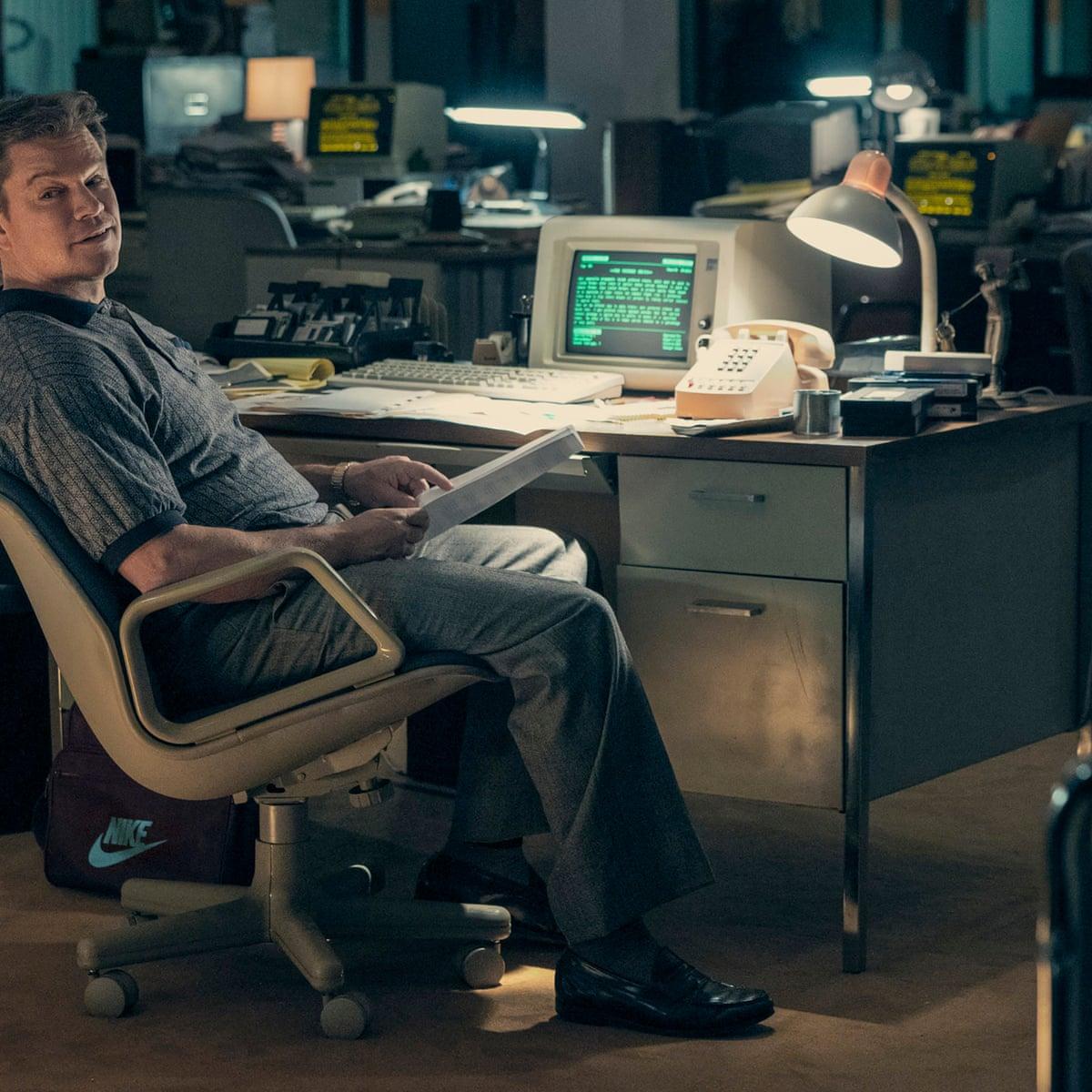
I watched AIR recently on Prime Video.
I expected a good business movie about Nike, Michael Jordan, and the creation of Air Jordan. Somewhere halfway through, I realized I was watching something much closer to the philosophy behind my book Asymmetric Decisions.
Not because the movie is about taking risks.
It is about recognizing that not all decisions have the same weight.
And then having enough conviction to protect the one that matters from all the noise around it.
Some of you have probably seen AIR. If not, it was released in 2023, directed by Ben Affleck, with Matt Damon playing Nike basketball executive Sonny Vaccaro, Ben Affleck as Phil Knight, and Viola Davis as Michael Jordan’s mother, Deloris. It is currently available through Prime Video, with purchase options through platforms such as Apple TV and Amazon Video depending on the country (Prime Video).
There are spoilers ahead, because I want to do something more interesting than review the movie.
I want to take the central decision in AIR and run it through the same two frameworks I use in Asymmetric Decisions: The Decision Filter and Shadow Patterns.
The result is surprisingly clean.
The game Nike was losing
The film takes us back to 1984.
Nike is already a successful company, so calling it a tiny startup would be misleading. But in basketball, it is the underdog. Converse and Adidas dominate the category. Nike is associated much more strongly with running.
In the movie, Sonny Vaccaro has a basketball endorsement budget of $250,000. The reasonable plan is to spread that money across several players from the 1984 NBA draft.
Diversify.
Reduce risk.
Don’t bet the division on one person.
Sonny sees the same information and reaches the opposite conclusion.
Instead of signing three or four decent prospects, he wants Nike to put its entire basketball budget behind one player.
Michael Jordan.
The problem is that Jordan does not want Nike.
He prefers Adidas. Converse is already deeply established in basketball. Nike is not the obvious choice, and Jordan is expensive enough to consume virtually the entire budget shown in the film.
From a conventional risk-management perspective, Sonny’s proposal looks reckless.
From an asymmetric perspective, it starts to look very different.
The mistake is assuming every dollar should be diversified
The central idea behind Asymmetric Decisions is simple:
Not all decisions are equal.
One small decision can unlock a year of movement. Another decision can consume months and change almost nothing. The skill is not making more decisions. It is identifying which decision actually carries the outcome.
That is exactly what Sonny does in the movie.
Everyone else is trying to optimize the basketball budget.
Sonny is questioning the premise.
The organization is asking:
How should we distribute $250,000 across the available players?
Sonny is effectively asking:
What if there is one player whose potential value is so much greater that distributing the budget is actually the riskier decision?
That is a completely different problem.
And this distinction matters.
An asymmetric decision is not simply a big bet. A big bet can be stupid.
It is a decision where the relationship between downside and possible upside is unusually uneven.
Nike could lose its basketball endorsement budget.
That hurts.
But if Sonny is right, Nike does not merely get a successful endorsement.
It gets Michael Jordan.
It gets a signature product.
It gets cultural relevance.
It gets a position in basketball it did not previously have.
And eventually, it gets one of the most valuable athlete-brand relationships ever created.
Nike’s original deal with Jordan was for five years. ESPN reports that Nike had protections allowing it to exit if certain sales targets were not reached. Instead, Air Jordan generated around $70 million in sales in its first two months. (ESPN.com)
The downside was real.
The upside belonged to another universe.
That is asymmetry.
Smaller players cannot always afford to play the safer game
This is one of the parts of AIR I find most interesting.
Nike Basketball has fewer resources than its dominant competitors in the category.
The obvious response to having fewer resources is caution.
I think that is often backwards.
When a larger competitor can outspend you, out-hire you, out-distribute you and survive more mediocre decisions, playing the same game conservatively can be the most dangerous strategy available.
You cannot beat someone with ten times your resources by becoming a slightly more efficient version of them.
Sometimes you need concentration.
You need to identify the decision where being right changes the game itself.
Sonny is not trying to win the existing sneaker endorsement game a little more efficiently.
He is trying to change what an athlete endorsement means.
That distinction is important for founders too.
Many founders with limited capital spread themselves across ten products, six acquisition channels, four partnerships and three markets because diversification feels responsible.
Sometimes it is.
Sometimes it is fear wearing a spreadsheet.
The better question is:
Which one of these decisions has a payoff curve radically different from the rest?
Conviction before consensus
Most of AIR is not actually about finding Michael Jordan.
Sonny finds the answer relatively early.
The rest of the movie is about surviving what happens after you see something before everyone around you sees it.
He has to convince his colleagues.
He has to convince Phil Knight.
He has to deal with Jordan’s agent.
He goes directly to Jordan’s family.
The team has to create the shoe and the pitch.
Jordan still prefers another company.
At almost every stage, there is a perfectly reasonable explanation for why the idea should die.
This is where the movie becomes particularly relevant to high-stakes decision-making.
The hard part is often not discovering the signal.
The hard part is preventing everything around the signal from talking you out of it.
In the movie, Sonny becomes the carrier of that signal until the rest of the organization can see it.
Eventually other people join him.
That distinction matters because this is not a story about a heroic individual being smarter than everyone else.
A decision of this size still requires a team.
But consensus comes after recognition.
Someone has to see the decision before the organization can organize around it.
This connects directly to another principle in my book: a decision is not the end of movement. It is the beginning of movement. Once the real decision is made, the right tasks become obvious.
Before Jordan, Nike has a portfolio problem.
After Jordan, suddenly there is a shoe to design, a presentation to build, terms to negotiate, a story to tell, internal approvals to secure.
One decision generates hundreds of tasks.
Hundreds of tasks would never have generated that decision.
Running Nike’s decision through The Decision Filter
The Decision Filter I built for Asymmetric Decisions has five levels: Recognition, Distillation, Structural Check, Selection and Movement.
So, as a thought experiment, I ran the central decision in AIR through it.
Recognition
The first step is to stop hiding decisions inside projects.
The question is not:
What should Nike’s basketball strategy be?
That is too vague.
It is not:
Which rookies should Nike approach?
Still too broad.
The actual decision is:
Should Nike concentrate its basketball resources on signing Michael Jordan?
Now we have something we can decide.
Recognition matters because vague decisions create infinite work. Precise decisions create selection.
Distillation
Now remove fear, social pressure, inherited assumptions and identity stakes. That is what the second level of my Filter is designed to do.
What remains?
Jordan is an exceptional player.
Nike is weak in basketball.
Jordan prefers Adidas.
Nike cannot compete by simply offering him the same thing everyone else offers.
The available budget is constrained.
A signature relationship with Jordan has potentially enormous strategic value.
Now look at some of the other statements surrounding the decision:
We don’t put the whole budget behind one player.
He doesn’t want Nike.
Phil won’t approve it.
This isn’t how we normally do things.
Those statements may contain useful information.
But they are not the same thing as evidence that Jordan is the wrong bet.
That is one of the hardest distinctions in high-stakes decisions:
Difficulty is not evidence against the decision.
Sometimes difficulty tells you something is structurally wrong.
Sometimes it simply tells you the decision has consequences.
The job is to know the difference.
The Structural Check gives a more interesting answer
This is where blindly celebrating Sonny would actually contradict my own framework.
The Decision Filter does not say:
You feel strongly about it, so do it.
Conviction is not proof.
At Level 3, I score four structural questions from 1 to 5: whether the structure is clean, whether the other side carries its own weight, the ongoing energy cost, and whether the decision expands freedom or creates dependency. Scores from 16 to 20 indicate strong structure, 12 to 15 mean mixed signals and require modification or more information, and below 12 defaults to no.
If I score the Jordan decision at the moment Sonny first proposes it, I would probably give it something like this:
Structure: 4/5. The strategic idea is clean, but the actual deal has not been constructed yet.
Does the other side carry its weight: 5/5. The entire thesis exists because Jordan brings extraordinary value himself.
Maintenance cost: 3/5. Building an entire product and brand around one athlete is not a low-maintenance commitment.
Freedom versus dependency: 2/5. Nike would deliberately create significant dependence on one athlete.
Total: 14/20.
That is not a clean YES.
According to the Filter, it is mixed signals.
Pause.
Modify.
Get more information.
And that is exactly what makes the story more interesting.
The right answer is not:
NO, too risky.
Nor is it:
YES, trust your gut.
The answer becomes:
YES, with changed conditions.
That is one of the four explicit selections available in The Decision Filter.
Nike does not just hand Jordan money.
It designs a product around him.
The relationship becomes bigger than a normal endorsement.
The economics are negotiated.
The actual historical contract also included performance protections for Nike. (ESPN.com)
The opportunity stays the same.
The structure gets better.
That is a fundamentally different way of thinking about risk.
Do not automatically reject the opportunity because the current structure is bad.
Sometimes the opportunity is right and the conditions are wrong.
Change the conditions.
Then Deloris Jordan changes the deal again
One of the strongest characters in the movie is not Sonny.
It is Deloris Jordan.
She understands something Nike itself is still learning.
If Michael creates disproportionate value, he should participate in that value.
The movie dramatizes her pushing for Michael to receive a share tied to the success of Air Jordan.
That moment is another asymmetric decision.
Nike can protect precedent.
Or Nike can recognize that Jordan is not a normal endorsement.
If the upside is non-normal, perhaps the deal structure should not be normal either.
The historical story is more complicated than the film suggests. There has been disagreement for years over how much credit Vaccaro deserves, who drove different parts of the negotiation, and who originated specific ideas. Jordan himself has emphasized George Raveling’s role, while his former agent David Falk has said he negotiated the deal primarily with Phil Knight and Nike executive Rob Strasser. (ESPN.com)
That matters.
AIR is a dramatization, not a documentary.
But for this article I am less interested in assigning historical credit than in the decision architecture the movie reveals.
And that architecture is remarkably useful.
Now run the movie through Shadow Patterns
The second diagnostic in Asymmetric Decisions is Shadow Patterns.
The idea is that many people do not lack intelligence, information or options.
They have recurring structures that protect them from making a decision they already know is uncomfortable.
My six starting patterns are Architecture as Avoidance, Half-Open Loops, Negotiating Against Self, Over-Responsibility, Confusing Pressure with Importance and Dragging Unclean Deals. They are not meant as universal personality types. They are starting points for discovering the protective patterns operating behind a decision.
AIR contains almost all of them.
The strongest one is Architecture as Avoidance.
Nike already has a process.
Scouting.
Rankings.
Budget allocation.
A portfolio of prospects.
Meetings.
All perfectly legitimate.
But those systems can also become a sophisticated way of avoiding the simpler, more frightening question:
What if we already know who we want?
That is Architecture as Avoidance.
You can build a beautiful system around a decision you are unwilling to make.
Then there is Confusing Pressure with Importance.
Nike has deadlines. Budgets. Internal politics. Other athletes. Agents. Competitive pressure.
All of it feels urgent.
Sonny separates urgency from leverage.
The Jordan decision matters more than the dozens of things producing more immediate pressure.
That distinction alone changes the direction of the division.
I also see Negotiating Against Self throughout the organization.
Jordan is special, but...
Jordan could transform the division, but...
We should pursue him, but...
The budget...
Adidas...
Phil...
At some point, another round of debate stops being analysis and becomes a mechanism for avoiding commitment.
This is one reason repeated internal negotiation is so expensive.
You are not getting new information.
You are reopening the same decision because you do not like its consequences.
Interestingly, Sonny mostly avoids Half-Open Loops.
Once he reaches his conclusion, he moves it into reality.
He talks to people.
He travels.
He creates confrontation.
He forces the organization to respond.
A decision that exists only in your head is not a closed decision. The Movement level of my Filter requires an externally observable action, ideally within 48 hours.
There is also a risk of Over-Responsibility.
Sonny pushes outside the normal boundaries of his role and carries an enormous amount of the initiative personally.
But I would not diagnose it as his dominant pattern.
There is an important difference between taking ownership of one consciously selected decision and becoming the permanent stabilizer of everyone else’s chaos.
One is leadership.
The other eventually becomes self-destruction.
Finally, Dragging Unclean Deals appears in reverse.
When the existing deal structure is not sufficient, the Jordans do not simply accept it because Nike wants the relationship.
The conditions change.
The opportunity survives because the structure is renegotiated.
That is cleaner than dragging a deal everyone privately knows is wrong.
My verdict
If I compress the whole movie into the two frameworks, this is what I get:
Filter Result Recognition
Bet on Jordan, not on a portfolio of average options
Distillation
Strong signal survives once convention and fear are removed
Initial Structural Check
Approximately 14/20, mixed signals
SelectionYES with changed conditions
Movement
Immediate, observable action across the organization
Dominant Shadow Pattern
Architecture as Avoidance
Secondary Shadow
Confusing Pressure with Importance
Third Shadow
Negotiating Against Self
Core asymmetry
Basketball budget at risk versus company-changing upside
Final verdict
Proceed, but redesign the structure around the asymmetric opportunity
That last sentence matters.
The lesson from AIR is not:
Bet everything.
It is not:
Ignore everyone.
It is definitely not:
Believe hard enough and reality will agree with you.
A concentrated bad decision is still a bad decision.
The better lesson is this:
When one option has a radically different payoff curve, stop treating it like every other option.
Then filter it.
Remove the noise.
Test the structure.
Change the conditions if necessary.
Select.
Move.
What Asymmetric Decisions is really about
This is why AIR stayed with me after the credits.
My book Asymmetric Decisions is not a productivity book.
It is not about getting more done.
It is about judgment and selection when there are too many possible things to do.
The central premise is that one right decision can be worth more than a thousand right tasks. One decision can generate a thousand tasks. A thousand tasks rarely generate the decision that should have come first.
That problem has become more important in the AI age.
Execution is getting cheaper.
Information is everywhere.
You can generate strategies, campaigns, products, code, research and options faster than at any point in history.
That sounds like freedom.
Without selection, it becomes noise.
The scarce resource is no longer the ability to produce another option.
It is the judgment to know which option deserves your resources.
Nike’s story happened decades before generative AI.
But the principle is even more relevant now.
The company did not need another list.
It did not need another hundred tasks.
It did not need to optimize everything equally.
It needed to recognize that one decision was different.
Everyone else saw concentration risk.
Sonny saw asymmetry.
And after the decision was finally made, the organization could move.
That is the Architect’s Position.
Not doing more.
Seeing what actually matters, selecting it, and allowing everything else to reorganize around the decision.
One decision. A thousand tasks.
Nike chose the decision.
Have you seen AIR? And more importantly: what is the one decision in your business that might deserve more of your resources than everything else combined?
Lucas


