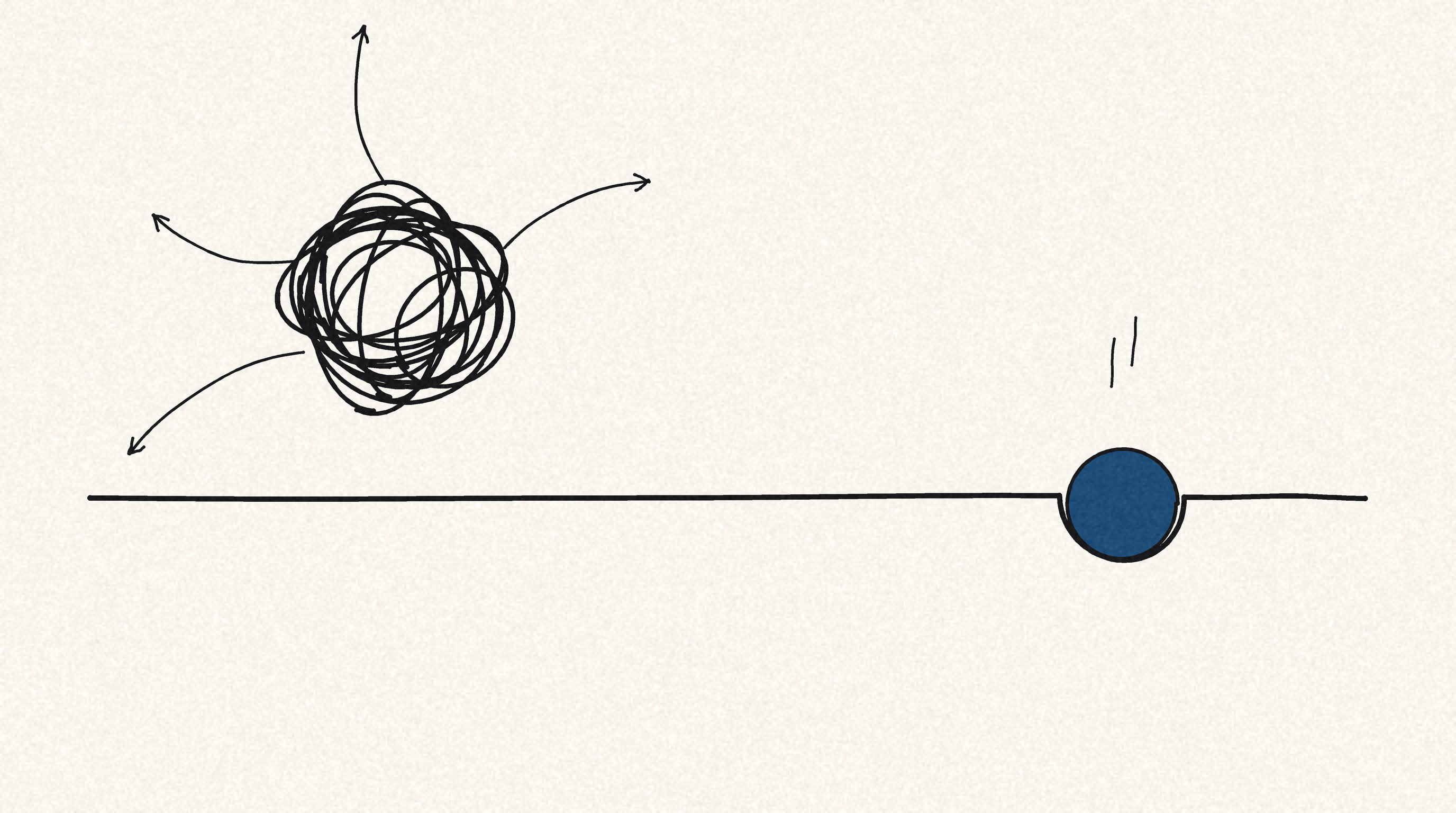
For most of my career, the actual work was the smallest part of the work.
Maybe twenty percent. The other eighty went to everything around it: discovery calls, meetings, writing offers, explaining the offers, negotiating the offers, convincing people I could do the thing, then doing the thing, then producing reports to prove the thing had been done, then presenting the reports so the reports would be believed.
I used to call it overhead. It’s not overhead. It’s a tax. The proving tax.
And it wasn’t just me. Salesforce has been measuring this for years: salespeople spend about 30% of their time actually selling. The rest disappears into admin, internal meetings, reporting, and preparing to sell. An entire profession where the job is the minority of the job.
I’ve watched companies staff whole departments for that second job. Millions in revenue, armies of people, and a margin that would embarrass a lemonade stand. That’s not a business model. That’s a proving machine with a small business attached.
The old marketing had two legal moves. Either you built a market, which is expensive and slow and mostly reserved for people with money to burn. Or you bent yourself into the shape of what clients already wanted, and competed on price with everyone else who bent the same way.
Both moves rest on the same assumption: the client doesn’t know you exist, doesn’t understand what you do, and must be chased and persuaded.
So we industrialized the chase.
Open my inbox. Cold emails, every day. Some from real companies with real products. And almost every one proves, in the first sentence, that they have no idea who I am, where I am, what I’m building, or what I need. They automated the chasing and skipped the understanding.
Everyone did. Which is why cold email reply rates collapsed from around 8.5% in 2019 to under 4% today. The chase is dying of its own volume. And AI made it worse before it made anything better: about half of what gets published online now is machine-written. The same porridge, industrial quantities, “personalized” with my first name.
The punchline, courtesy of McKinsey: 71% of customers now expect personalized interactions, and 76% get frustrated when they don’t get them. Companies that get this right pull 10 to 15% more revenue from it. So the bar for feeling understood keeps going up, while the average message gets dumber. That gap is the opportunity.
Here’s what I think people are missing while they use AI to chase harder.
The point of this technology is not louder chasing. It’s matching.
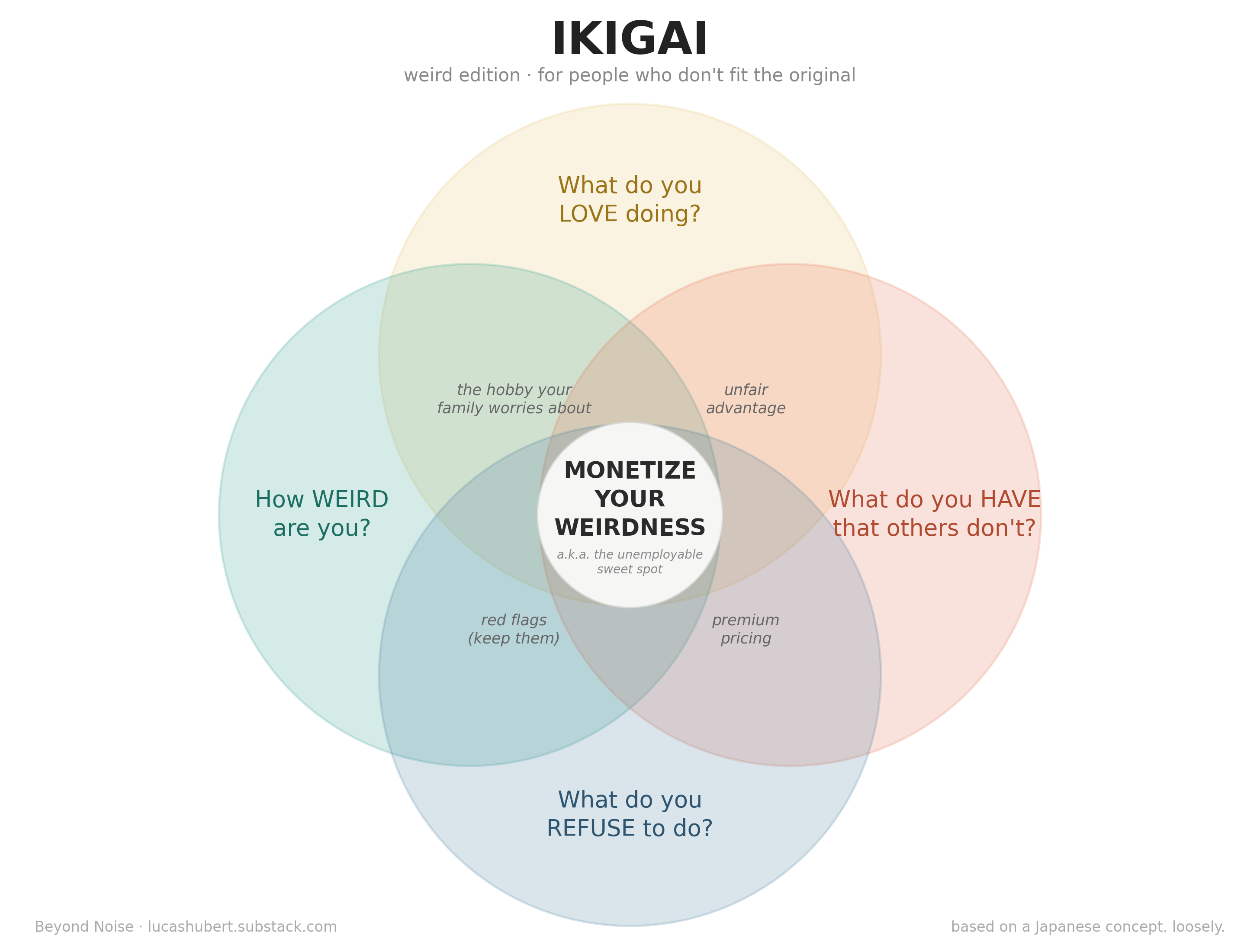
Flip the old assumption. Don’t bend yourself into the shape of a client. Be entirely, almost uncomfortably, yourself. Do only the thing you’re actually best at, and document it in public, in your own words. Yes, this filters people out. That’s not a side effect. That’s the mechanism. Your weirdness is the filter. The wrong people bounce. The right ones stop scrolling.
And the machines are now very, very good at finding the people on the other side of your filter.
I’ll give you my numbers, so this doesn’t sound like theory.
I sell a $67 book to complete strangers. Cold Meta traffic. Around three hundred copies a month. No cold emails, no DMs, no “quick call to explore synergies”, no content calendar, no dancing for an algorithm. I wrote the book once. The ad doesn’t persuade anyone. It filters. And Meta’s AI does the one thing it is world-class at: finding more of the people who stop.
The book does my proving now. I did it once, in writing, instead of doing it live in every sales conversation for the rest of my life. That’s the asymmetry: effort once, matching forever. The deliverable became the marketing.
Now the honest part, because this is where most “AI changed everything” essays start lying to you.
Two caveats.
First: paid attention is not a free lunch. Customer acquisition costs are up roughly 60% over the last five years, and they are not going down. If your offer is generic, AI targeting will simply help you lose money with better aim. Matching amplifies a sharp signal. It cannot create one. The filter has to exist before the machine can find the people who pass it.
Second: this works at the entry, not at the top. Nobody has ever bought serious advisory from me because an ad told them to. Not once. The people who pay for high-trust work come in the long way: book, reply, conversation, trust. The ad opens a $67 door. Everything above that door still runs on the oldest technology there is. If you sell expensive things, matching gets you into the right rooms. It doesn’t close them.
But here’s what entry-level matching does that no amount of chasing ever did: it fills the room with the right people.
That’s the real economics of this. A client who understands you and your work: the collaboration is clean, the work is the work, the proving tax drops toward zero. A client who pays but doesn’t fit costs more than he pays. You just don’t see it on the invoice. You see it in scope creep, in explaining, in defending, in reporting. In the eighty percent.
Not everyone is my client. That’s not arrogance. That’s the foundation of scale.
Because scaling was never about more clients. It’s about better fit. More clients with bad fit scales your proving tax. Better fit scales the twenty percent that was the point all along.
If you’re building something right now, here’s what I’d do with all of this. Three moves.
Skip the content treadmill. Somewhere along the way, “start a business” became “spend six months filming reels for five platforms.” Most people treat it as the entry fee. Check the math first: organic reach on Facebook fell from about 16% of your followers in 2012 to 1-2% today. Instagram shows your posts to maybe 3-4% of the people who explicitly asked to see them. That’s the deal on the table: months of free labor in exchange for reaching almost nobody. Paid distribution flips it. You pay money instead of months, you reach exactly the people your filter selects, and if you have an entry offer, the reach can fund itself. That’s not a hack. That’s refusing to work for the platform for free.
Cold outreach isn’t dead. Dumb cold outreach is dead. The generic blast to a bought list is over; the reply rates above already buried it. What works now is embarrassingly simple: write when there’s an actual reason. AI can watch the signals all day: a company announces funding, an expansion, a new market, a hire that reveals a plan. You contact the decision-maker while the need is live, and you name the reason you’re writing. Signal-triggered outreach gets reply rates of 8 to 15%, against 2 to 5% for the static-list spray. Same channel. The difference is that one of them is a message and the other is noise.
Retire persuasion. Cold calls convert at about 2%, and two thirds of people won’t even answer an unknown number anymore. That’s not a script problem. Your client is bombarded daily, so the defense is automatic. Every persuasion technique you ever learned now triggers the exact immune system it was designed to bypass. Matching does the opposite: you arrive as the answer, not the interruption. Nothing to overcome, no objections to handle, no closing framework required.
That’s the ideal I’m pointing at. You, matched with the clients who need exactly what you do, exactly now, when nobody else is better positioned to do it. No chasing, no convincing, no proving tax. The technology for this exists today. Most people are just using it to chase faster.
The mass era is running out. Mass cold email is dead in the data. Mass content is drowning in its own slop. Mass influence is aging badly. What replaces it is smaller and quieter: people who are unmistakably themselves, found by exactly the people who need them, with machines doing the finding.
You don’t find a niche. You become one. The technology finally caught up with that sentence.
So, two real questions, because I’m collecting data on this. What’s your ratio: how much of your week is the actual work, and how much is proving you can do it? And what’s the one thing in your business you keep doing only because everyone says you have to? Reply or leave a comment. I read everything.
Most of you have read Asymmetric Decisions. This essay is that book applied to marketing: one sharp position instead of a thousand persuasions. If you’re new here and haven’t read it yet, that’s the place to start.
Lucas